Enrichment Programs | Design Thinking
Enrichment Programs
Design Thinking
DESIGN THINKING PROGRAM

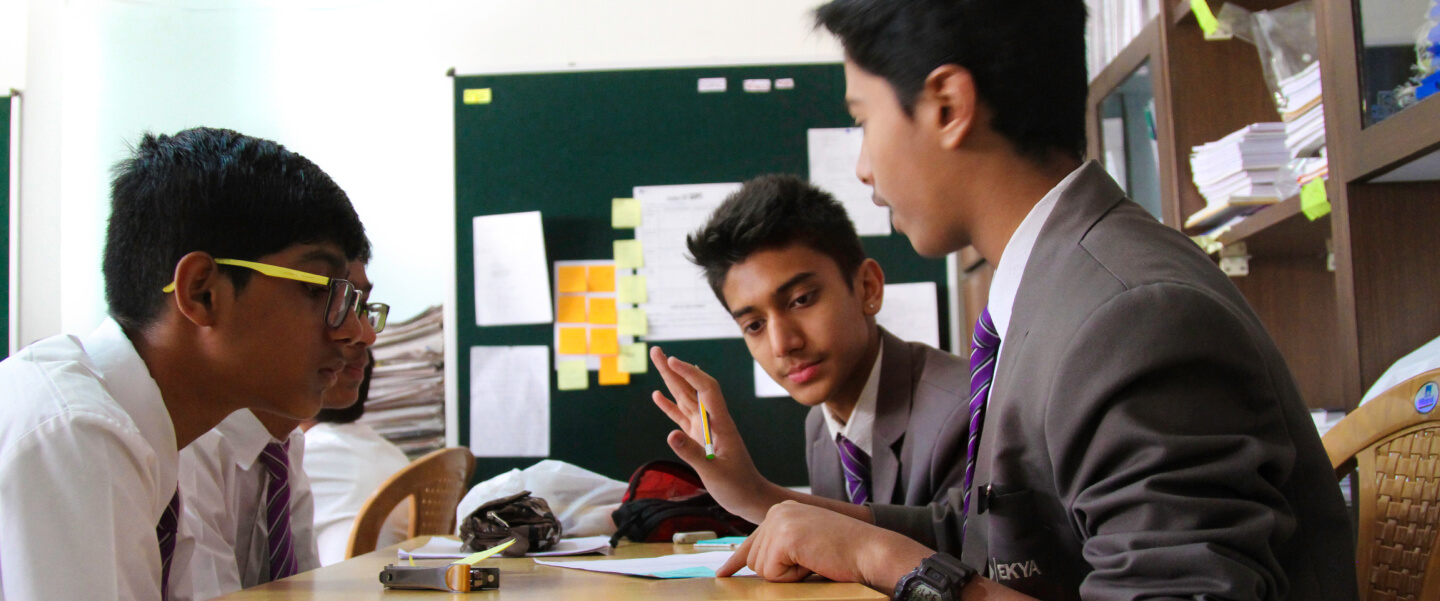
At Ekya Schools, we use Design Thinking as part of the curriculum to enable our students to be problem solvers in the real world. Through Design thinking challenges, students learn to work with multiple perspectives, access and make sense of information, apply critical thinking and intuition, iteratively learn from failure and create solutions that integrate both ideation and empathy.
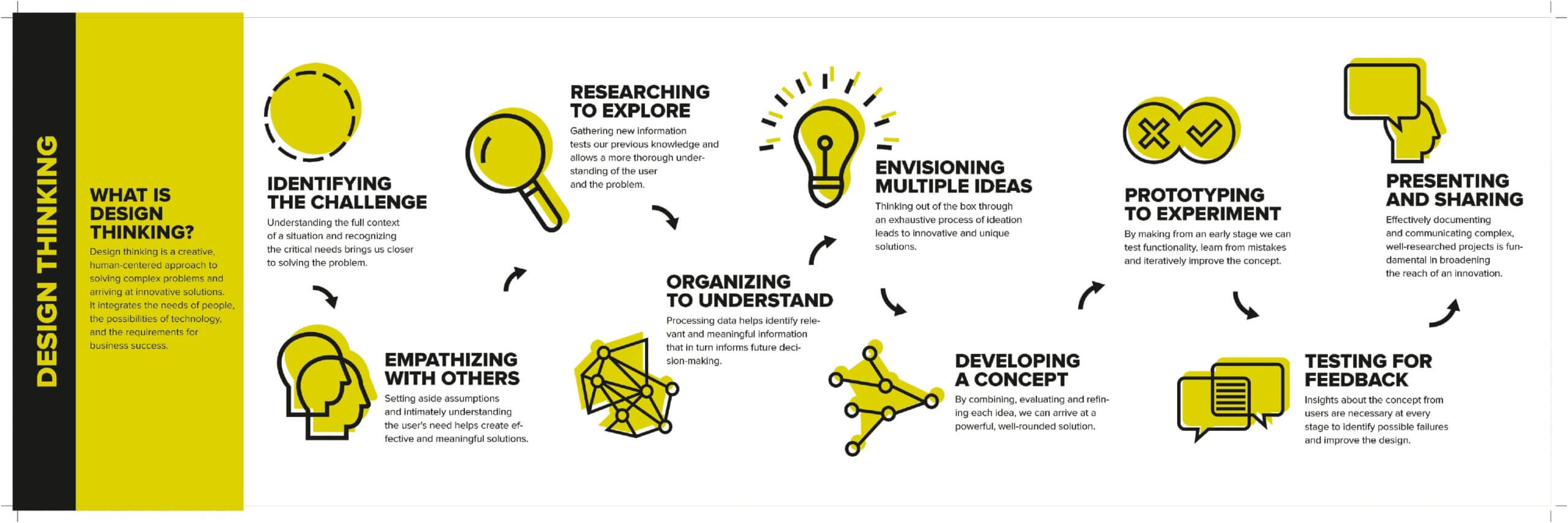
Ekya Schools’ unique toolkit supports the Design Thinking Process and enables students to experience each creative process in the context of problem-solving with empathy as the key aspect of the process.
THE DESIGN THINKING PROCESS:
The students use their skills as creative thinkers to build solutions to a socially relevant challenge through the iterative and hands-on Design Thinking process.
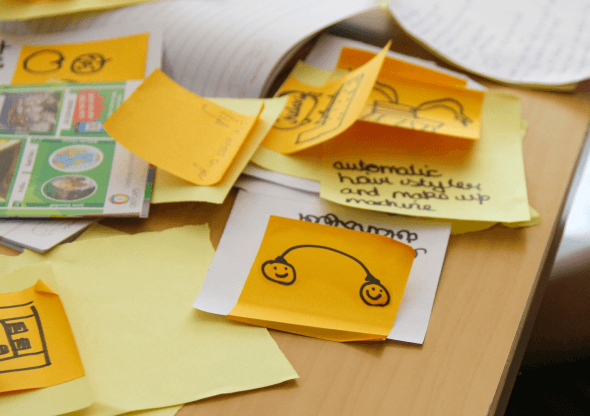
Identify the challenge through a brainstorming session and share observations.
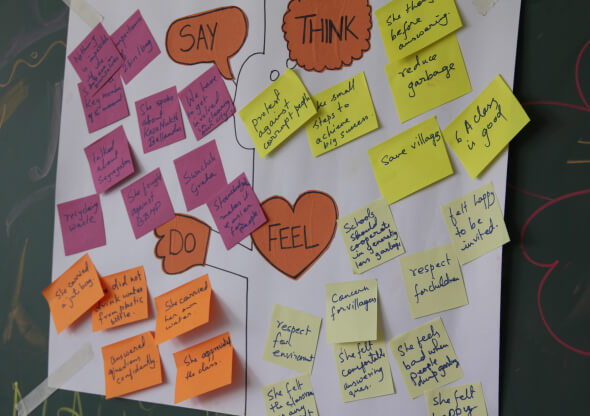
Empathize with the Users/Stakeholders affected by the problem; Build an empathy map.
THE DESIGN THINKING PROCESS:
The students use their skills as creative thinkers to build solutions to a socially relevant challenge through the iterative and hands-on Design Thinking process.
Identify the challenge through a brainstorming session and share observations.
Empathize with the Users/Stakeholders affected by the problem; Build an empathy map.
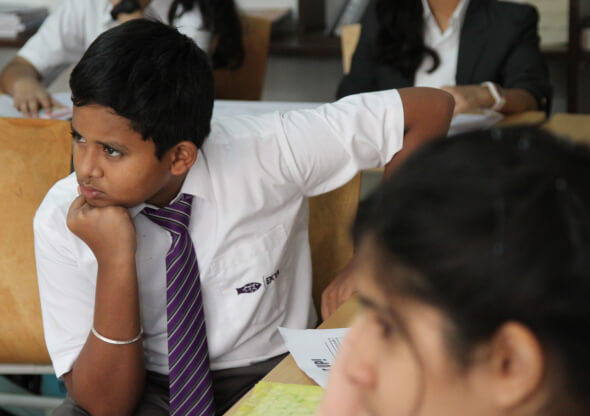
Use primary and secondary research to support findings about the problem.
Validate new information about the problem and share with the group.
Process information in a manner that makes meaning for the next steps; Build a point of view from which to work.
Use the point of view to think of multiple ways to solve the problem,
Narrow down possibilities to come up with the best way to solve the problem through feedback.
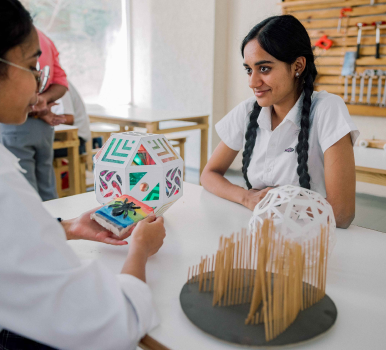
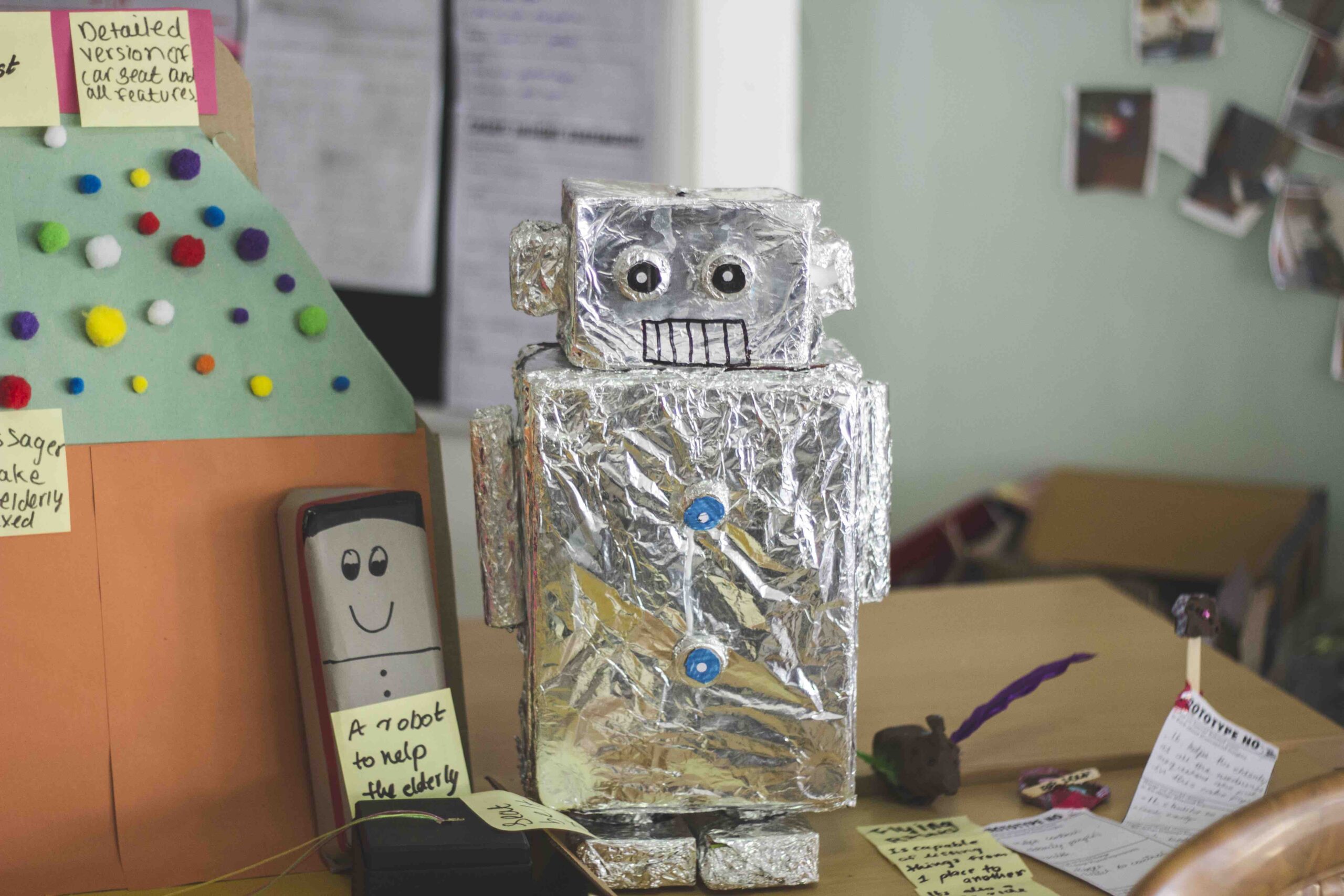
Build prototypes of the solution- an experience, a model, an illustration!
Use feedback from the user and peer groups and improve the prototypes
Share solutions to the problem with the community
A Pioneer In The Use Of Design Thinking In Education
The Design Thinking Timeline
At Ekya Schools, large-scale Design Thinking workshops have been conducted across campuses.
2015-16 : Design Thinking at Ekya School ITPL.
Problem Statement: “How might we create solutions for the growing garbage problem in Bangalore to improve the lives of local citizens?”
2016-17: Design Thinking at Ekya JP Nagar
Problem Statement: “How might we create solutions to better integrate Bangalore’s elderly into our society?”
2018-19: Design Thinking at Ekya Schools- ITPL, JP Nagar and BTM Layout
Problem Statement: “How might we create solutions to help citizens in Bengaluru lead a healthier lifestyle?”
2022-23: Design Thinking at Ekya Schools- ITPL, JP Nagar and BTM Layout
Problem Statement: “How might we make recycling more accessible to the citizens of Bengaluru?”
2023-24: Design Thinking at CMR National Public Schools
“How might we ensure the safety of stray animals while also protecting the well-being of local citizens?”.
2024-25: Design Thinking at FIND Festival
“How might we find innovative and sustainable packaging solutions that encourage recycling in an eco-friendly manner?”
2025-26: Design Thinking at Ekya Schools aligned to our Service Learning
Projects- “How might we encourage citizens of Bangalore to reduce & recycle waste through sustainable practices?” & “ How might we nurture kindness to develop a sense of belonging for the visually impaired citizens of a community?
2025-2026: Compassion and Community
Compassion and Kindness Challenge: Students will explore ways to encourage spontaneous acts of kindness to enhance community well-being. This aligns with our core purpose of fostering empathy and creating positive social impact through design thinking.
Traffic Solutions Challenge: Participants will tackle urban mobility by developing alternative transportation methods to improve community health and accessibility. This challenge emphasises our commitment to sustainable design solutions.
2026-2027: Care and Sustainability
Palliative and Elderly Care Challenge: Students will work on enhancing the quality of life for the elderly, focusing on dignity and independence. This builds on our previous successful projects like the Crew Aider and E-Pill Reminder.
Food Wastage Challenge: Participants will reimagine food consumption practices to promote sustainable nutrition and minimize waste. This challenge embodies our emphasis on sustainable solutions and responsible innovation
2027-2028: Urban Development and Environment
Urban Design and Accessibility Challenge: Students will focus on creating inclusive public infrastructure that ensures equitable mobility. This challenge reflects our commitment to human-centered design principles.
Climate Change Challenge: Participants will develop solutions to cultivate environmental awareness and preserve biodiversity. This aligns with our goal of preparing students to address global challenges through innovative design thinking.
Design Thinking Tool Kit
Projects
Smart Bin
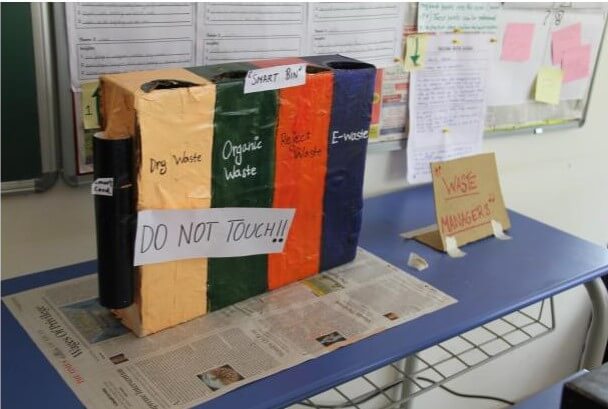
Students designed a ‘smart bin’ that rewards people who segregate waste and put them into the right bins.
Garbage Scanner
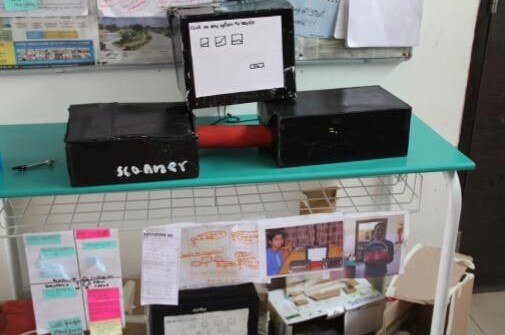
Students, in this project, designed a scanner that will help scan garbage and tell citizens in which bin they should dispose garbage.
Dust App
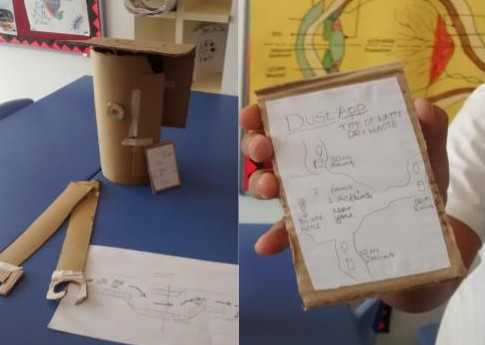
Students designed an app that allows citizens to locate garbage bins around their homes. The garbage bins are fitted with sensors that have shutters that keep them closed, especially beneficial during rainy seasons and preventing unpleasant odours.
Crew Aider
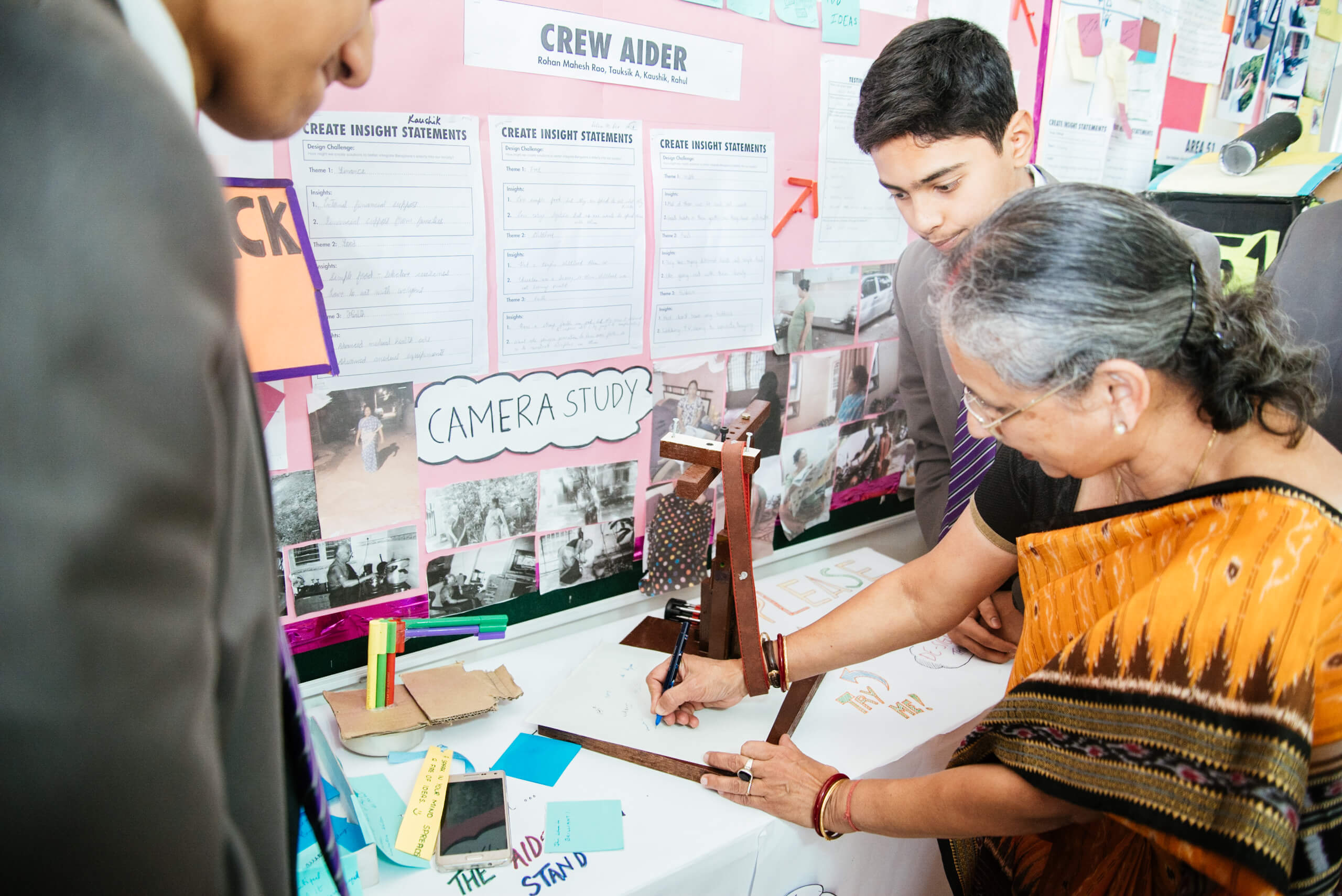
Students created a device that would help the elderly who had problems related to hand and arm movements and could not sign documents/ hold pens or pencils. The device was designed to hold a strap fixed to a frame that would support the wrist of the person who needs to sign/ write.
Energy Tracks
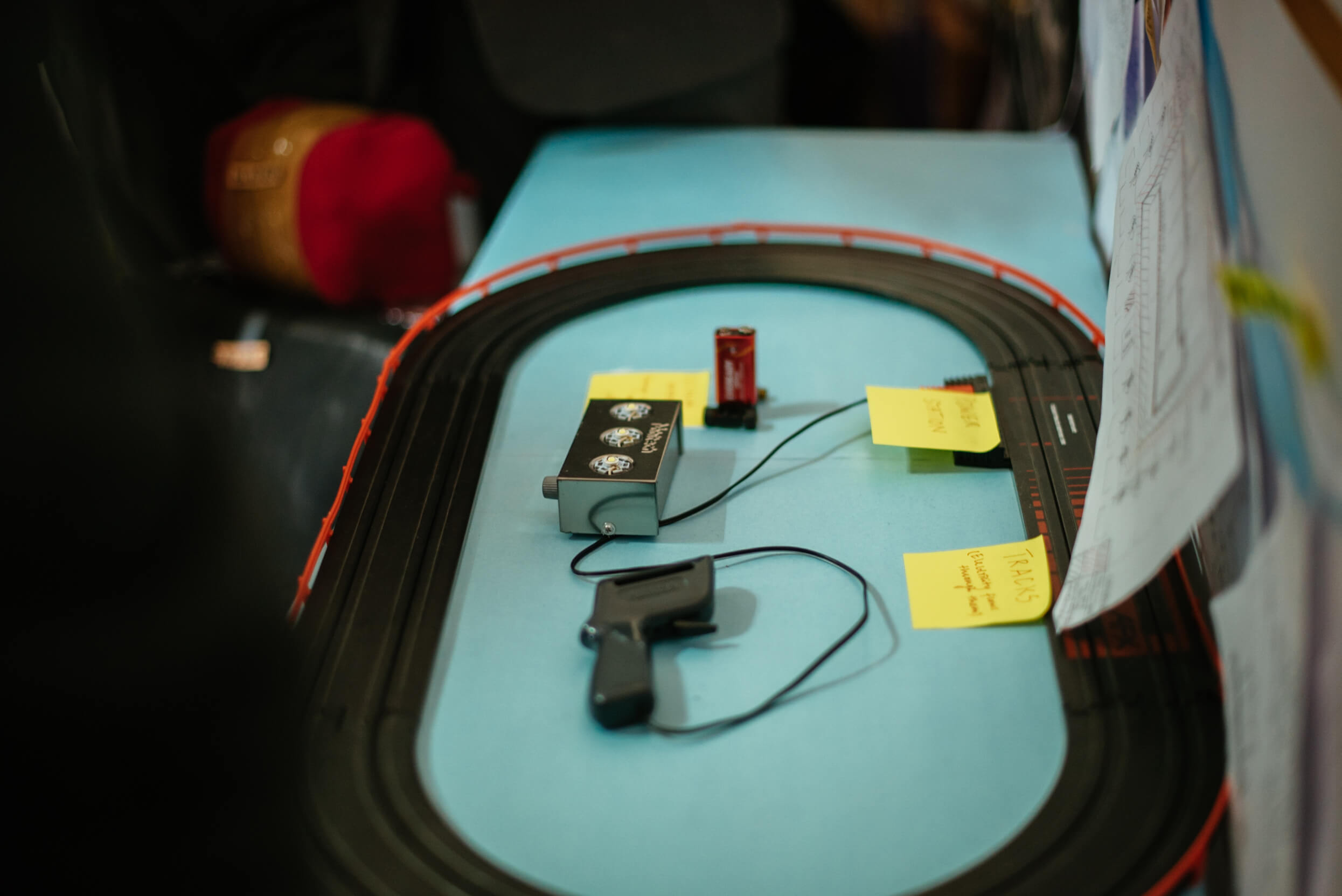
Students designed a track to be placed on footpaths that will use the energy from the track to turn street lights on. They encouraged the need for the elderly to walk and keep fit. They also designed special wheelchairs that move on these tracks as well.
The E-Pill Reminder
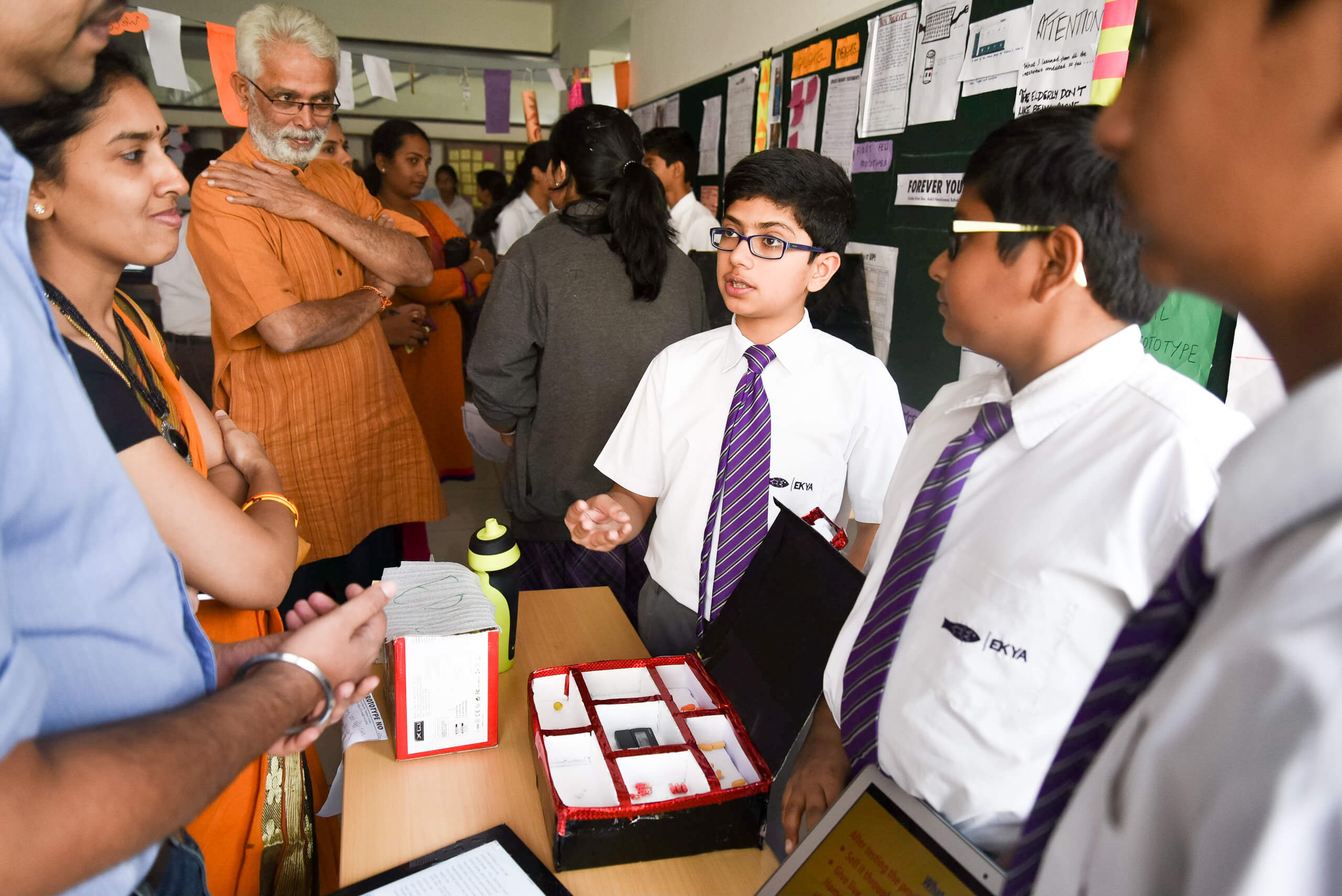
The E-pill reminder was designed to help the elderly to take their medicines regularly. The students developed insights based on personal experiences at home and decided to ease their arduous process of taking multiple tablets. The E-pill reminder is designed to send a message to their phones, and the lights would blink in the box itself to indicate which one to take.
Student Voices